Repairs · Wall ovens
Wolf wall oven repair, part by part
A Wolf wall oven looks like one box, but it works as a team of six parts: heating elements, the convection system, the temperature sensor, the self-clean door lock, the door and its hinges, and the control board. Each one fails in its own recognizable way, and knowing which is which makes the repair faster and the estimate clearer.
Short answer
Why is my Wolf wall oven not heating?
If the display works but the cavity stays cold or barely warms, the usual suspects are a failed bake or broil element, a temperature sensor feeding the board a wrong reading, or a control board relay that no longer sends power to the elements. If the display is dark too, check the breaker first. Beyond that, the fix needs testing with a meter, so it is a job for a technician.
Six parts that decide whether dinner works
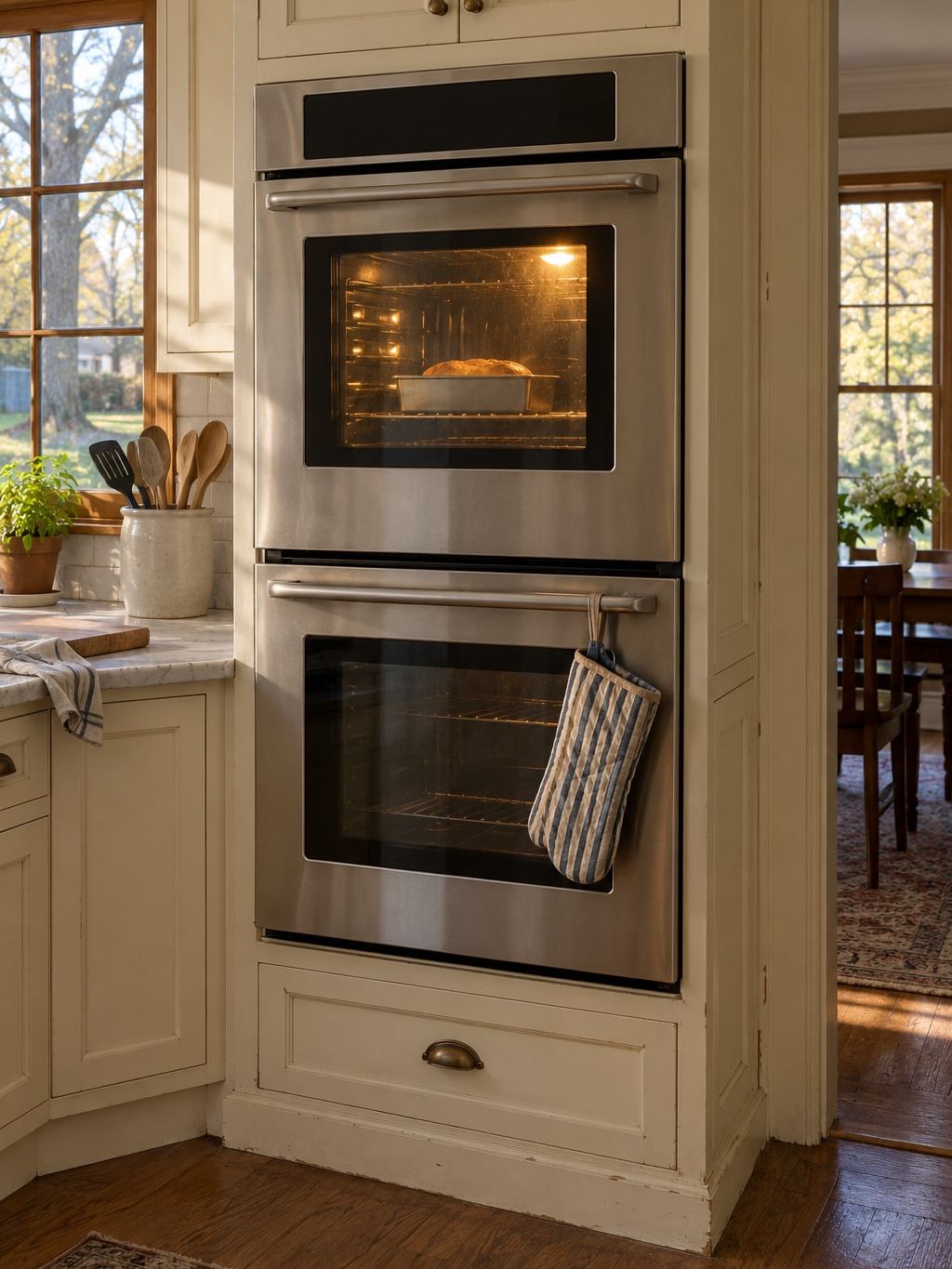
Heat comes from the bake element at the bottom and the broil element at the top, with convection heating and fans at the back; current Wolf wall ovens use a dual-fan convection system. The fans spread the heat evenly; when one slows or stops, the oven still gets hot, but the back of the tray browns and the front stays pale. The temperature sensor, a thin probe inside the cavity, reports to the control board, which switches the elements on and off to hold the set point. A sensor that drifts makes the oven run hot or cool even though everything else is healthy.
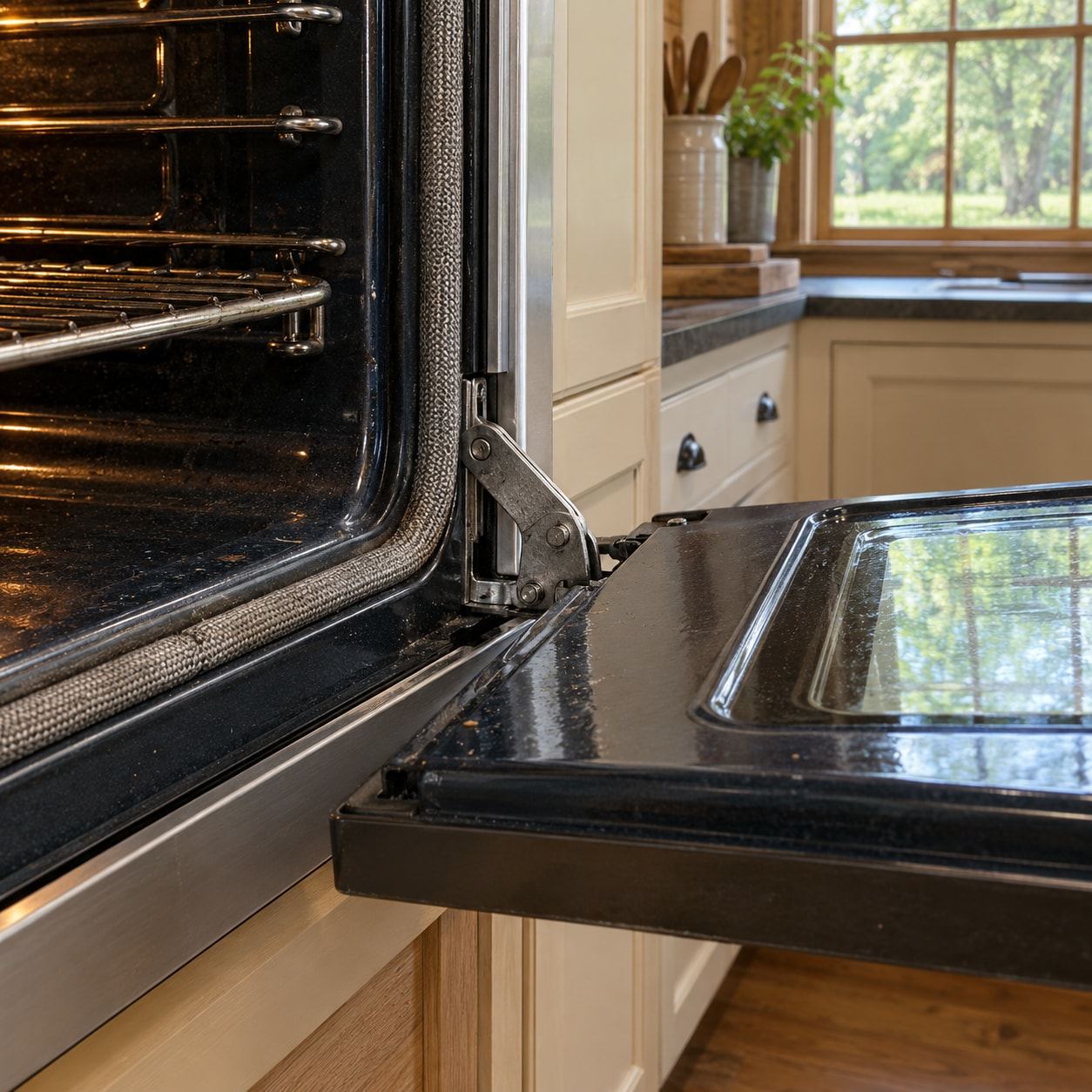
The self-clean system adds a motorized lock that holds the door shut while the cavity reaches cleaning temperature and keeps it locked until things cool down. The door itself rides on hinges and springs that carry a lot of weight every day, and its gasket keeps heat inside. Finally, the control board and the panel you touch tie it all together, so a board fault can imitate almost any other failure.
That is why our technicians test the oven as a system rather than replacing the first part that looks tired. You hear what was found and the actual cost before any work starts, and nothing is done without your approval. If your oven sits under a cooktop as part of a range, our Wolf range repair page is the better starting point.
What to notice before you call
A few observations from you can save a lot of guesswork on the visit.
- Which mode fails: bake, broil, convection, roast, or all of them
- On a double oven, whether the upper cavity, the lower cavity or both are affected
- Any error code or message, written down exactly as it appears
- Whether the problem started right after a self-clean cycle
- Unusual sounds: a fan that grinds or whines, clicking from the lock area, nothing at all
- Whether the door closes evenly and stays shut without a gap at the top or sides
- Whether the light, display and touch controls respond normally
Symptom by symptom
-
Oven stays cold, display works
Usually traced to: Bake element or control board relay; less often a wiring connection behind the oven.
-
Bakes fine, but broil does nothing
Usually traced to: The broil element itself, or the circuit that feeds it.
-
Food browns on one side only
Usually traced to: Convection fan running slow or stopped, or the convection element out.
-
Recipes that used to work now come out over- or underdone
Usually traced to: Temperature sensor drift, a worn door gasket, or an oven that needs calibrating.
-
Door stays locked after self-clean, long after cooling
Usually traced to: Lock motor, lock switch, or the board not getting the signal that the cavity has cooled.
-
Door drops open, will not close flat, or sags to one side
Usually traced to: Hinge or spring wear, sometimes a bent hinge after something heavy was set on the open door.
-
Panel ignores touches or shows random codes
Usually traced to: Control board, touch panel or a sensor sending a value outside its normal range.
Short answer
Why is my Wolf oven door locked after self-clean?
The lock is designed to stay engaged until the cavity has cooled well below cleaning temperature, so give the oven time before worrying. If the oven is cool to the touch and the door still will not release, the lock motor, its switch or the control board is not completing the unlock cycle. Do not force the door: prying it can bend the latch and damage the frame, turning a small repair into a larger one.
Common beliefs about Wolf ovens, checked
- Often saidIf the oven gets hot, the temperature sensor must be fine.
- In practiceA sensor can drift gradually and still let the oven heat. The oven then holds the wrong temperature with total confidence. Uneven results from recipes you know well are the clue; our oven calibration guide explains how drift happens.
- Often saidSelf-clean is gentle routine maintenance.
- In practiceIt is the hardest cycle the oven runs: extreme heat stresses the lock, the elements and the electronics. Run it when you can live without the oven for a few days in case something gives, not the morning of a dinner party.
- Often saidIn a double oven, if one cavity fails, the other is next.
- In practiceEach cavity has its own elements and its own sensor, so one can fail while the other keeps working. They share controls, though, which is why a technician checks both.
- Often saidUneven baking means the oven is worn out.
- In practiceMore often it is a single part: the convection fan, one element or the door gasket. Those are ordinary repairs, not a reason to replace the oven.
Your oven type and what we watch for
| Oven | What is different | What we look at closely |
|---|---|---|
| Single wall oven | One cavity, often installed at eye level | Elements, convection fan, sensor, door alignment |
| Double wall oven | Two independent cavities in one tall cabinet | Which cavity fails, the shared controls, the weight on the lower door's hinges |
| Oven stacked with a steam or speed oven | Two different appliances in one column, wired separately | Heat and ventilation between the units; we check each one on its own terms |
| M Series and E Series | Current Wolf wall oven families with different control panels and styling | Panel response, error codes, sensor readings |
| Professional and older Legacy models | Earlier designs still cooking in many local kitchens | Hinge and gasket wear, connections that have seen years of heat cycles, parts availability |
Short answer
Can you repair a Wolf double oven if only one cavity is broken?
Yes. The upper and lower cavities have their own elements and sensors, so we diagnose the failing one and leave the healthy one alone unless it shows wear too. Tell us which cavity misbehaves when you call. The $89 visit is taken off the repair bill, and the real figure is confirmed after the inspection.
Wolf wall oven questions from our customers
Can I keep using the top oven while the bottom one is broken?
In most cases yes, provided the broken cavity is not tripping the breaker, smelling of burned wiring or showing a lock fault. If you notice a burning smell from the wiring, switch the oven off at the breaker and call us.
My Wolf oven shows an error after a power outage. Is it damaged?
Often the board just needs to finish resetting. Switch the oven off at the breaker for a short while and then restore power. If the same code comes back during normal use, that is a real fault worth diagnosing.
Should I run self-clean before the holidays?
If you want to, do it well ahead of time, not the week of the big dinner, so that any problem the cycle reveals can be fixed in time. Our holiday kitchen preparation article has a fuller checklist.
Do you fix the oven half of a Wolf steam and convection combination?
We repair both appliances. The conventional wall oven is covered here, and the steam unit has its own page: Wolf convection steam oven repair.
How is the repair price set?
The house-call fee is $89 and is set against the repair price if you say yes to the repair. The rest depends on which part failed, so the exact cost is confirmed after the inspection. Our pricing page explains how the visit and estimate work.