Repairs · Ventilation hoods
Wolf ventilation repair: hoods, inserts and downdrafts
A range hood tells you a lot before it quits. A new hum, a rattle that comes and goes, a whistle at high speed or sudden silence each point to a different part, and listening carefully is the first step of the diagnosis.
Short answer
Why is my Wolf range hood making a loud noise?
A steady hum or growl that rises with fan speed usually means worn blower motor bearings. A rattle or wobble points to a fan wheel that is out of balance or has grease built up on it, or to a loose filter or panel. A whistle often comes from clogged baffle filters or a restricted duct. Clean the filters first; if the sound stays, the blower needs a look.
Listen first: what each sound usually means
Run the hood at each speed and note when the sound starts. Then match it below.
-
Low hum or grinding that gets louder at higher speeds
Usually traced to: Blower motor bearings wearing out. It tends to get worse, not better.
-
Rhythmic thump or a wobble you can feel on the hood shell
Usually traced to: Fan wheel out of balance, often from grease build-up or a bent blade.
-
Rattle that stops when you press on a filter or panel
Usually traced to: A baffle filter not seated, or a loose trim panel or light cover.
-
Whistle or rushing sound, weak pull at the cooktop
Usually traced to: Baffle filters packed with grease, or a duct restriction such as a stuck damper flap.
-
Fan is slow to start, or runs only on one speed
Usually traced to: Motor capacitor or the speed control. A tired capacitor can also make the motor hum without spinning.
-
Total silence, lights still work
Usually traced to: Blower motor, its wiring or the control that sends power to it.
-
Fan runs but the noise seems to come from the attic or an outside wall
Usually traced to: Some Wolf hoods use a blower mounted in the duct or outside the house; that unit is the one to inspect.
-
Lights dead or flickering, fan fine
Usually traced to: Bulb, socket or the light circuit on the control board.
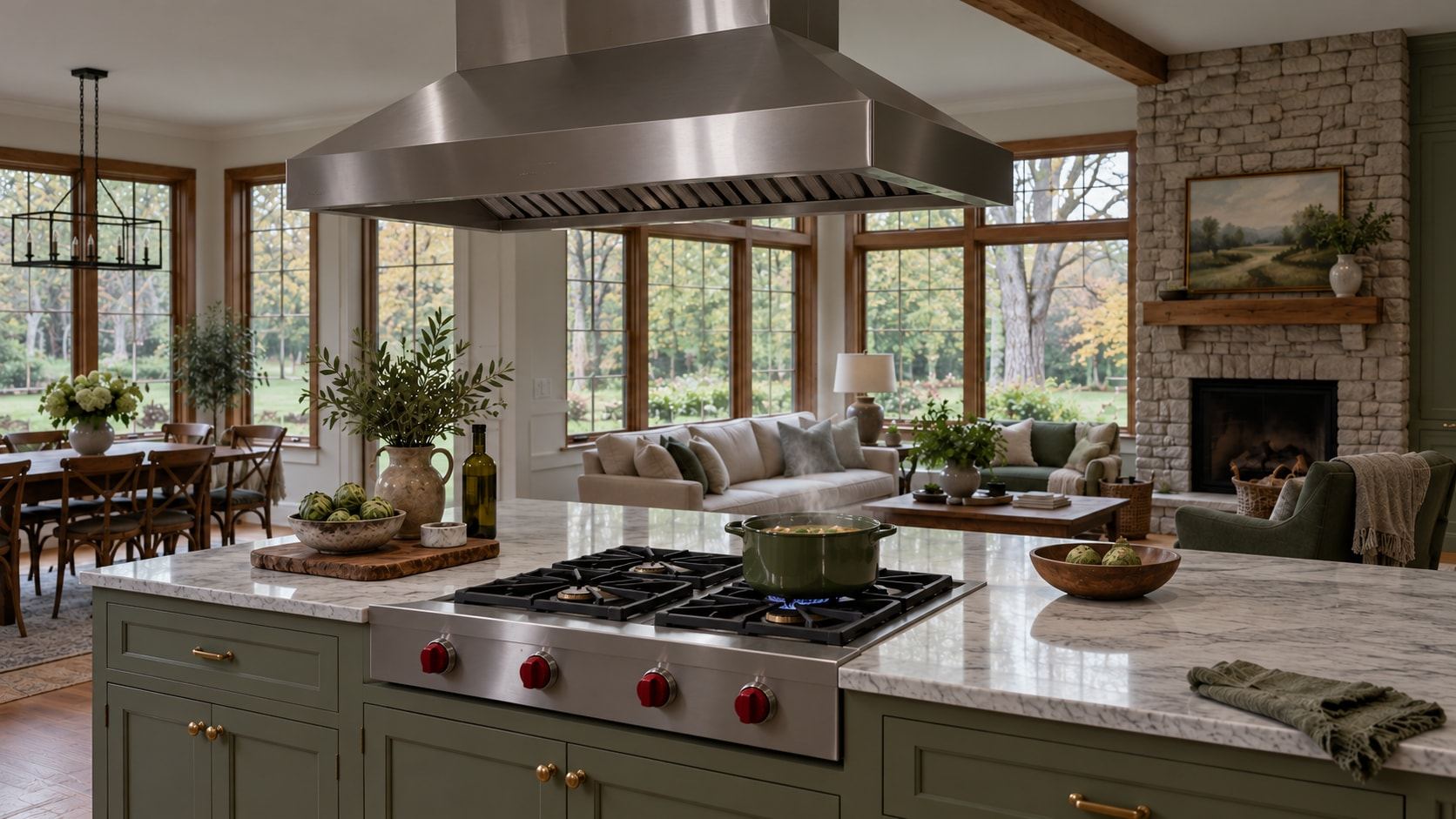
Which Wolf hood you have, and what is special about it
| Type | Where it sits | Parts we pay attention to |
|---|---|---|
| Wall hood | Against the wall above a range or rangetop | Blower, baffle filters, lights, speed control, the duct run through the wall or ceiling |
| Island hood | Hung from the ceiling over an island cooktop | Same core parts, plus a longer vertical duct and a shell that can resonate when the fan is unbalanced |
| Ventilation insert | Built into a custom hood enclosure made by the cabinetmaker | Blower and controls inside a wood or plaster surround; access and panel removal need care |
| Downdraft | Behind a cooktop, rising out of the counter when switched on | Lift motor, gears and limit switches, plus the blower below the counter and its duct |
| Remote or in-line blower | In the duct, in the attic or on an outside wall, paired with a hood | The motor you hear is away from the kitchen; wiring and the duct between them are part of the job |
Short answer
Why is my Wolf hood fan not working?
If the lights work but the fan is silent, the cause is usually the blower motor, its capacitor, the speed control or a loose connection. If nothing works, check the breaker first. A fan that hums without spinning should be switched off rather than left running, since the motor can overheat.
What owners can safely do
None of these needs tools beyond a sink and a soft brush, and none involves the wiring.
- Pull the baffle filters and wash them in hot, soapy water; let them dry fully before putting them back.
- Seat each filter until it sits flush; a crooked filter rattles and lets grease past it.
- Wipe the underside of the hood and the filter rails, where grease collects first.
- Check that every light works; replace a bulb only with the type named in your manual and with the hood off.
- Run the fan at each speed and listen; a new sound is easier to describe if you note when it began.
- If you have a downdraft, keep the slot clear of utensils, towels and pan handles before switching it on.
Common beliefs about hood speed and noise
- Often saidThe highest fan speed is always the right one.
- In practiceHigh speed is for heavy searing and smoke. For everyday simmering a lower speed captures the steam, is quieter and puts less wear on the motor.
- Often saidA noisy hood is just a noisy hood.
- In practiceIf it was quiet before, the change matters. Bearings and an unbalanced fan wheel get louder over time and can take the motor with them.
- Often saidClean filters mean the whole system is clean.
- In practiceFilters catch most of the grease, but some reaches the fan wheel and the duct. That build-up is what throws the wheel out of balance.
- Often saidA downdraft that will not rise needs a new motor.
- In practiceOften the lift is blocked, a gear has slipped or a limit switch is misreading. The motor is only one of several suspects.
Downdraft vents: the moving part that needs the most care
A Wolf downdraft rises from the counter behind the cooktop when you turn it on and lowers again when you are done. That movement comes from a small lift motor driving gears, with switches at the top and bottom of travel that tell the motor when to stop. The blower itself lives below the counter, inside the cabinet, and pulls air down through a duct.
Because it sits right behind the burners, a downdraft collects spills and the odd utensil that slips into the slot. Something wedged in the track, a stripped gear or a limit switch that never reports the top position can each leave it stuck halfway or refusing to move. Forcing it up by hand can strip gears that were fine, so please leave it where it stopped.
Hoods and downdrafts work together with the burners below them, so a ventilation visit is a good moment to mention anything odd on the cooking side too. We also repair Wolf ranges and Wolf cooktops and rangetops. The visit costs $89 and is folded into the price of the repair; you get the actual cost after the inspection and before any work. More on how that works is on the pricing page.
Short answer
Why won't my Wolf downdraft rise?
Check that nothing is lying in the slot or pressing on the top of the vent, and that the cooktop circuit has power. If it still does not move, or moves partway and stops, the usual suspects are the lift motor, its gears or a limit switch. Do not force it by hand; that can strip the gears.
Questions people ask about Wolf hoods
Is it safe to keep cooking while my Wolf hood is making a grinding noise?
Short use is usually fine, but a grinding blower is wearing out and can seize. If it starts to smell hot or the noise jumps, switch it off and cook on lower heat with a window open until it is repaired.
My Wolf hood light works but the fan does not. Is that an expensive fix?
It depends on the cause. A capacitor, a connection or a speed control is a smaller job than a blower motor. We test which part failed and give you the real figure before any work starts; the $89 visit fee is taken off the repair bill.
Can a Wolf island hood be repaired without taking it down?
Filters, lights and many controls are reached from below with the hood hanging where it is. How much of the shell has to come off to reach the blower depends on the model and the fault, and we tell you what is involved before starting.
Why does my Wolf downdraft stop halfway up?
The control stops the lift when it senses resistance or when a position switch reports something unexpected. Clear the slot and try once more. If it stops again, call us rather than pushing it.
Who repairs Wolf range hoods near Hinsdale?
We do. We repair Wolf hoods, inserts and downdrafts across Hinsdale, Oak Brook, Burr Ridge, Clarendon Hills, Western Springs and La Grange. Call (872) 258-1999, answered 24/7, or book a visit online; visits run seven days a week, 8:00 AM until 6:00 PM.
Related reading and services
- Why a working hood matters What the hood does for the rest of the kitchen and why its condition is worth watching.
- Care plan for a kitchen full of Wolf How to schedule upkeep when the hood is one of several Wolf appliances in the house.
- Wolf range repair Burners, ovens and controls on the range under your hood.
- Contact us Phone, online booking, hours and the towns we drive to.