Repairs · Convection steam ovens
Wolf convection steam oven repair, from reservoir to drain
Almost every steam oven problem is a water problem. Water leaves the reservoir, turns to steam in the generator, condenses in the cavity and has to drain away cleanly, and a fault anywhere on that route shows up as missing steam, puddles or a stubborn message on the panel.
Short answer
Why is my Wolf steam oven not producing steam?
The most common reason is scale: mineral deposits from the water coat the steam generator and narrow its passages until little or no steam comes out. Other causes are an empty or badly seated reservoir, a water level sensor that reads wrong, or a pump or valve that no longer moves water to the generator. If the reservoir is full and seated correctly and descaling has not helped, the generator and water path need a technician.
Follow the water: where a steam oven breaks
Start at the reservoir. The oven checks the water level with a sensor; if the tank is not pushed fully home, or the sensor is coated with deposits, the oven may refuse to steam or ask for water it already has. Wolf's convection steam ovens are designed to run from this removable reservoir, so in most kitchens there is no water line to check; if your installation differs, the installation guide for your model shows how it is supplied.
Next, the steam generator heats the water and pushes steam into the cavity. This is where minerals settle, and it is the part that suffers most when descaling is postponed. Temperature and humidity sensors tell the control board what is happening inside; when scale or moisture affects them, the oven can stop a program with an error even though it has been heating normally.
Finally, the water has to leave. Condensed steam runs to the drain, and the door gasket keeps vapor and water inside the oven. A blocked drain, a hardened or torn gasket, or a loose hose connection is how water ends up on the cabinet or the floor. Our technicians follow the same route on the visit, from tank to drain, so the cause is found rather than guessed at. For the dry-heat wall oven that often sits beside a steam oven, see Wolf wall oven repair.
Why timing matters with a steam oven
A client in Burr Ridge described a repair we did before a dinner party:
When our Wolf steam oven required attention before a dinner party, their team responded with urgency and grace. The repair was completed seamlessly, and our evening proceeded without delay.
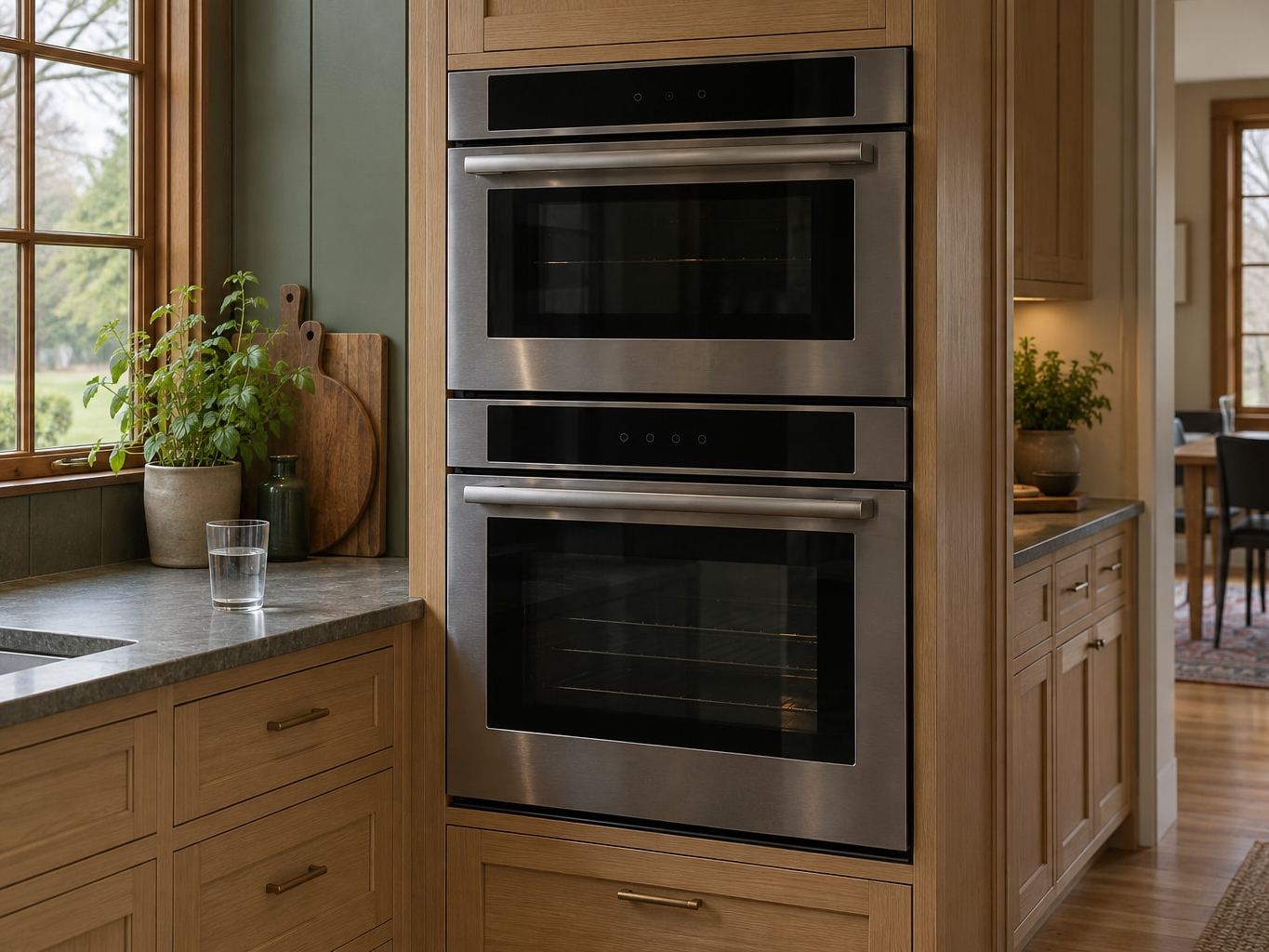
How scale builds up and what the oven does at each stage
How fast this happens depends on how hard your water is and how often you steam. The order of events, though, is nearly always the same.
- Early onA thin mineral film forms in the generator and around the level sensor. The oven behaves normally and you notice nothing.
- As deposits growSteam takes longer to start, and programs run a little longer than they used to. Bread crusts and steamed vegetables come out slightly different.
- The reminder appearsThe oven asks for descaling. This is the cheapest point to act: a complete descaling cycle, run as the manual describes, usually restores normal operation.
- If the reminder is ignoredScale narrows the passages, sensors start reading wrong, and the oven may stop programs with errors or produce weak, sputtering steam.
- Heavy buildupDeposits can block the generator or the drain path. At this stage descaling alone may not be enough, and parts may need cleaning or replacement by a technician.
Signs on the panel and in the kitchen
-
No steam, or only a little, with a full reservoir
Usually traced to: Scale in the steam generator, a pump or valve not moving water, or a generator heating fault.
-
Oven keeps asking for water
Usually traced to: Reservoir not fully seated, a dirty or failing level sensor, or a pump that no longer moves water to the generator.
-
Water on the floor or under the oven
Usually traced to: Blocked drain, loose or cracked hose, an overfilled reservoir, or a worn door gasket.
-
Drips from the door during or after steaming
Usually traced to: Gasket hardened, torn or out of its groove, or a door that no longer closes evenly.
-
Descale message returns right after descaling
Usually traced to: Cycle interrupted or not completed, heavy scale still in the generator, or a sensor misreading.
-
Program stops with an error code
Usually traced to: Temperature or humidity sensor fault, scale affecting a sensor, or a control board problem.
Short answer
Why is my Wolf convection steam oven leaking water?
Leaks usually come from the drain side of the system: a clogged drain, a loose or cracked hose, or a door gasket that no longer seals. An overfilled or misplaced reservoir can also spill. Wipe up the water, stop steaming, and if water is reaching the cabinet or electrical parts, switch the oven off at the breaker and call us.
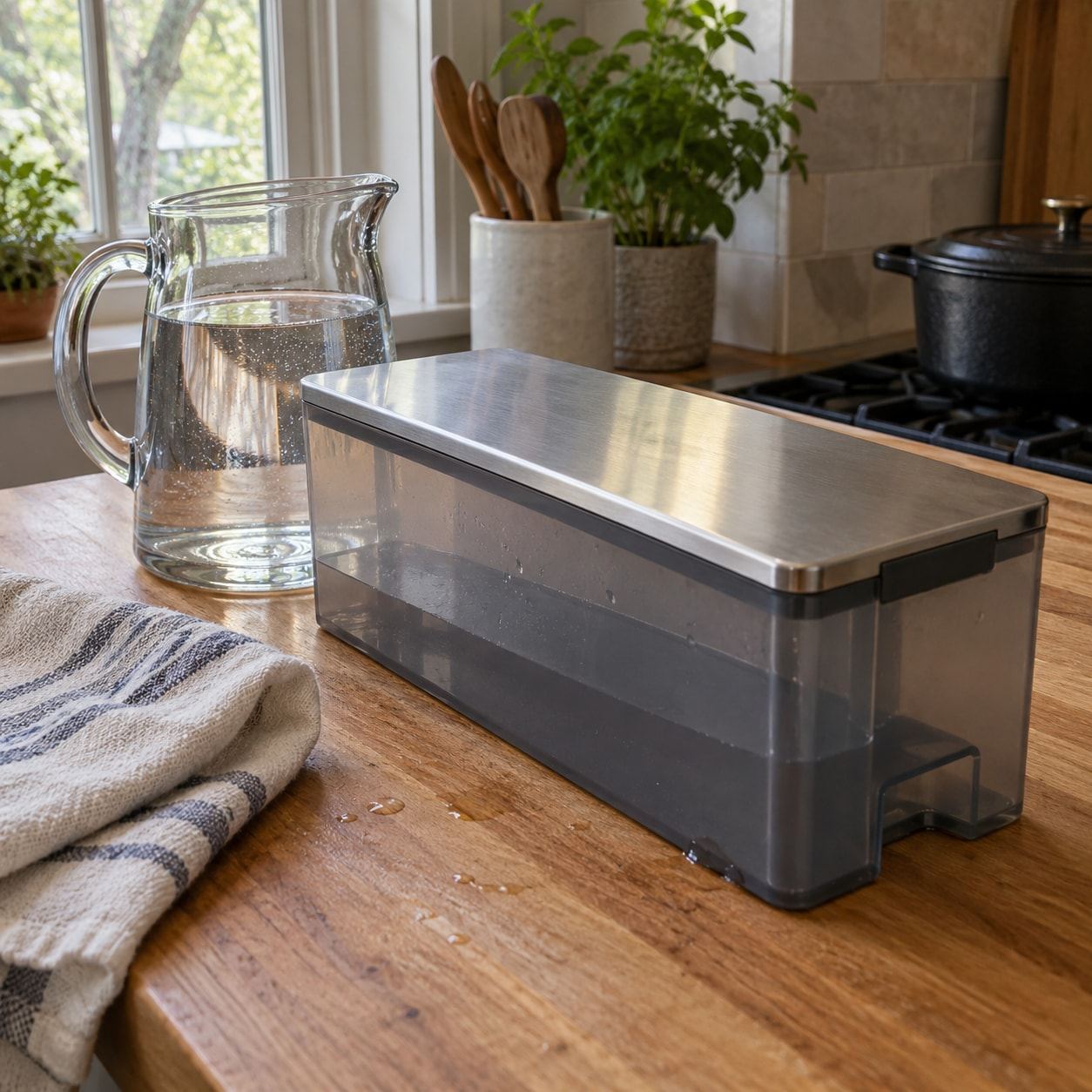
What you can do yourself between visits
Daily habits do more for a steam oven than any repair. None of these require tools.
- Empty and rinse the reservoir after steaming instead of leaving water standing in it
- Refill with fresh water, and seat the tank firmly until it clicks into place
- Wipe condensation from the cavity and the door gasket once the oven has cooled
- Leave the door slightly open after use so the cavity can dry
- Run descaling when the oven asks, and let the cycle finish without interruption
- Check the gasket for cracks, flattening or spots where it has pulled out of its groove
- Write down any error code exactly before calling, and note what program was running
Short answer
Why won't the descale error clear on my Wolf steam oven?
On most units the reminder clears only after the full descaling program runs to the end. If the cycle was stopped early or the oven was switched off midway, the message stays. If you ran the complete cycle and it still returns, heavy scale or a faulty sensor is usually behind it, and a technician should check the generator.
Steam oven questions people ask
Can I use my Wolf steam oven on convection only while the steam is not working?
Often yes, if the oven heats normally and there is no leak or error. Dry convection does not depend on the water system. Avoid steam programs until the oven has been checked.
Should I use filtered or distilled water in a Wolf steam oven?
Follow the water guidance in your owner's manual. Water quality has a big effect on how fast scale builds, so if your water is hard, ask the technician on the visit what makes sense for your kitchen.
Is a water leak from the steam oven an emergency?
Turn the oven off and wipe up the water. If water is reaching cabinetry or anything electrical, switch the oven off at the breaker and call us; our urgent repair page explains how those calls are handled.
How often should a Wolf steam oven be descaled?
Descale whenever the oven asks. How often that happens depends on your water hardness and how much you steam, so there is no single interval that suits every kitchen.
Does hard water affect other Wolf appliances too?
Yes. Built-in coffee systems are just as sensitive to minerals; our coffee system descaling guide explains what happens inside them.
Where can I learn which steam oven modes to use?
This page is about repairs. For cooking modes and everyday use, see our convection steam oven tips.
What does a Wolf steam oven repair cost?
The visit is $89 and is set against the repair price. The actual cost depends on whether it is a cleaning job, a sensor, a gasket or the generator, so it is confirmed after inspection. See our pricing page for how estimates work.